

Nevesh | August 2026
India has produced plenty of software success stories. Hardware has been a different challenge.
Building machines requires years of engineering, manufacturing expertise, product validation and customer trust. Few startups survive that journey, and even fewer build products that find demand outside India.
Kerala-based Genrobotics is trying to do exactly that.
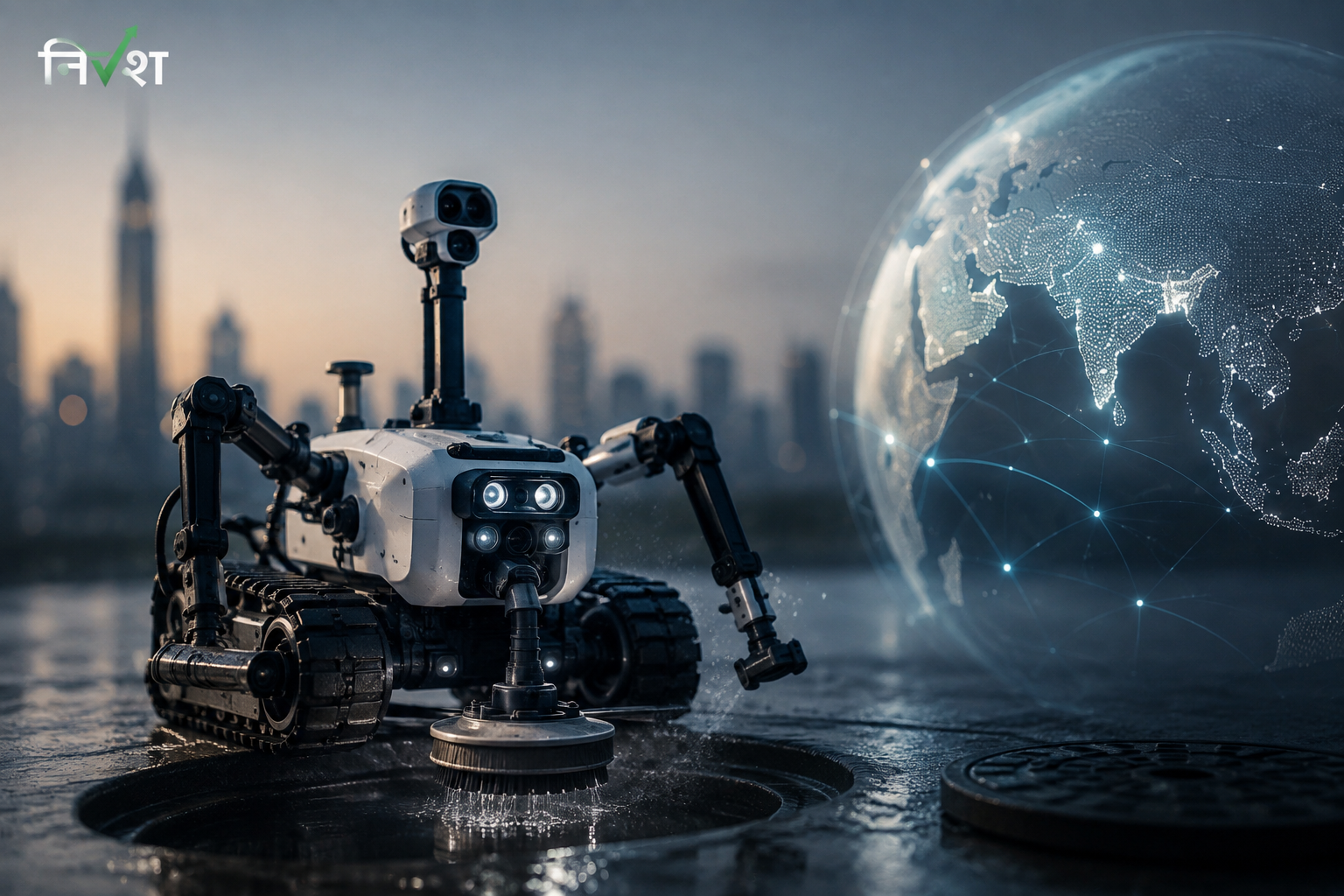
Founded in 2017 by Arun George, Nikhil Suresh, Tony Thomas, Vipin K., and Athul Joseph, the company first gained national attention with Bandicoot, a robotic system designed to eliminate manual scavenging by cleaning sewer manholes without requiring humans to enter them.
That single product solved a long-standing public safety problem while proving that Indian deep-tech startups could build globally relevant hardware.
Today, Genrobotics is entering a new phase.
Beyond Bandicoot
Bandicoot remains the company’s flagship product and is already deployed across hundreds of municipalities, defence establishments, airports, refineries and industrial facilities.
But the company is no longer positioning itself as a one-product robotics startup.
Its portfolio now spans industrial inspection systems, rehabilitation robotics, AI-enabled automation platforms and robotic solutions for hazardous environments.
The common thread is simple: replace dangerous human work with intelligent machines.
Profitability Before Expansion
Unlike many venture-backed hardware startups, Genrobotics has focused on building a sustainable business instead of chasing growth at any cost.
The company has already achieved profitability while steadily expanding its manufacturing capabilities and product portfolio.
That financial discipline has now attracted one of India’s most respected technology backers.
Zoho Corporation recently invested in Genrobotics through its deep-tech investment initiative, providing strategic capital to accelerate research, manufacturing and global expansion.
Rather than pursuing rapid scale through heavy cash burn, the partnership strengthens the company’s long-term product roadmap.
Taking Indian Robotics Global
International markets are becoming an increasingly important part of Genrobotics’ growth strategy.
Demand for robotic inspection systems, industrial automation and hazardous-environment solutions continues to rise as governments and enterprises invest in worker safety and operational efficiency.
Genrobotics is positioning itself to serve that demand while continuing to manufacture its products in India.
For a country that has traditionally imported advanced robotics, exporting indigenous robotic platforms marks an important shift.
Why This Matters
India’s startup ecosystem has produced numerous software unicorns.
Global hardware champions remain rare.
Building robotics companies requires patient capital, manufacturing capability, deep engineering talent and years of product refinement.
Genrobotics represents a different kind of startup story one where innovation is measured not only by funding rounds, but by machines deployed in the real world solving problems that few others are willing to tackle.
If India wants to become a global deep-tech manufacturing hub, companies like Genrobotics will matter as much as the country’s next generation of software startups.
The Nevesh View Point
The biggest opportunity for India’s startup ecosystem may no longer be building another app.
It may be building products the world cannot easily replicate.
Deep-tech businesses take longer to scale, require more capital and carry greater execution risk. But once they achieve product-market fit, they often create stronger competitive advantages than software businesses.
Genrobotics is still early in that journey.
Whether it becomes a global robotics leader remains to be seen.
But its progress highlights an important shift: Indian startups are beginning to export engineering, manufacturing and intellectual property, not just software.
At Nevesh, we look beyond the headlines to understand the businesses, founders and ideas shaping India’s next decade of growth.