

Most people think investing risk begins and ends with the stock market going up and down. If markets fall sharply, investing suddenly feels dangerous. If portfolios are doing well, risk hardly comes to mind.
But real investing risk is much more personal than market volatility.
Two people can invest in the same mutual fund, face the same market correction, and still react very differently. One continues their SIP calmly and waits for markets to recover. The other panics, stops investing, or exits entirely. The investment may be identical, but the investor is not.
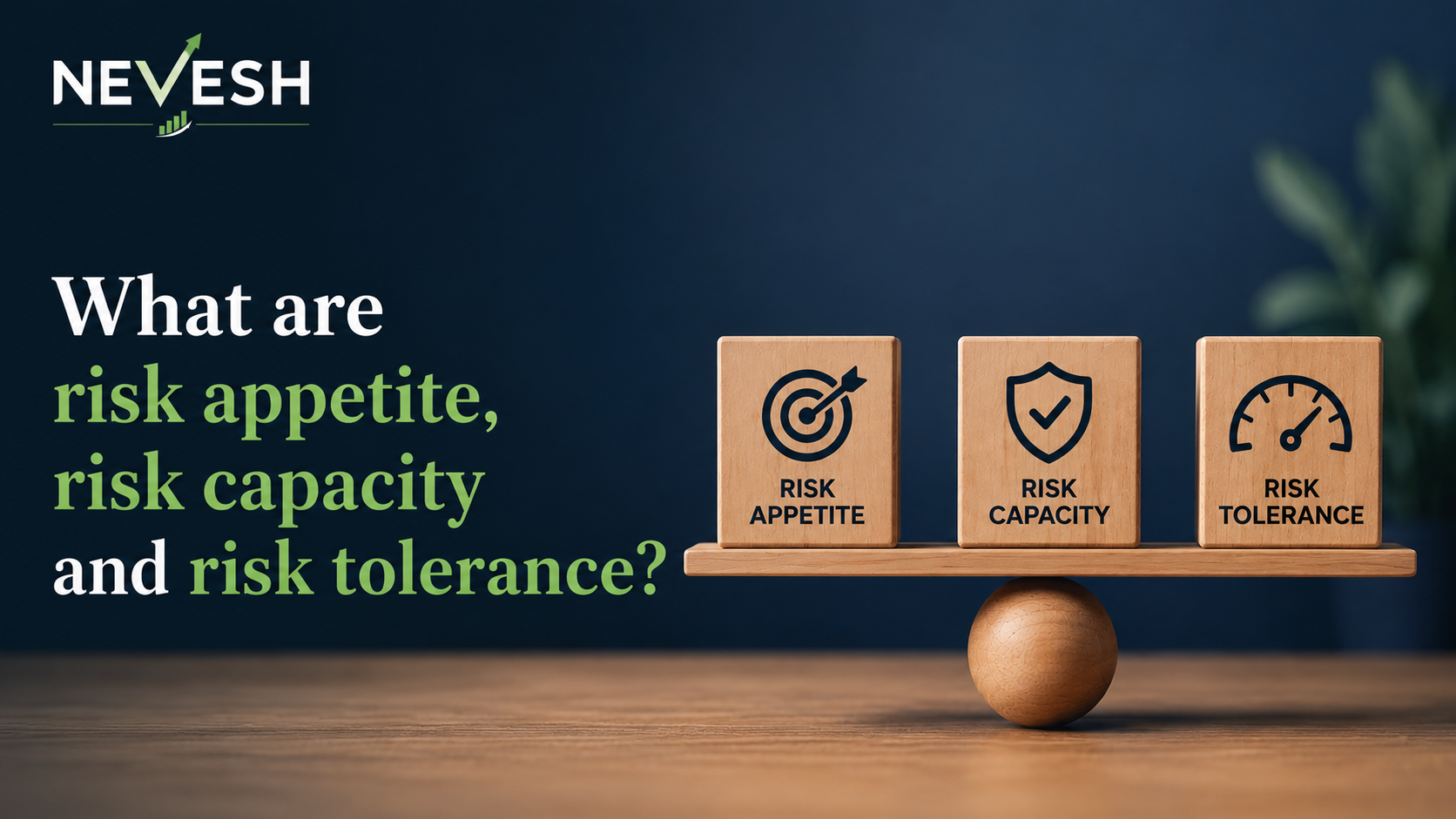
That difference usually comes down to three things: risk appetite, risk capacity, and risk tolerance.
These terms sound similar and are often used interchangeably in personal finance conversations, but they mean very different things. Understanding them properly can help investors avoid one of the biggest causes of poor returns: taking the wrong kind of risk for their situation.
Because in reality, investing success is not just about earning returns. It is also about surviving uncertainty long enough to benefit from compounding.
Why Understanding Risk Matters More Than Ever
India’s investing culture has changed rapidly over the last few years. Millions of first-time investors have entered equity markets through SIPs, trading apps, and digital investing platforms. Investing has become easier, faster, and far more accessible than it was a decade ago.
At the same time, market behaviour has become more emotionally intense.
Bull markets create confidence very quickly. Social media amplifies success stories. Screenshots of extraordinary returns travel faster than discussions around risk. During corrections, the mood reverses just as quickly. Investors who felt aggressive a few months ago suddenly become defensive.
This cycle repeats itself constantly.
That is why understanding your own relationship with risk matters more than simply choosing the “best” investment product.
A portfolio that looks perfect on paper can still fail if the investor cannot emotionally or financially handle the journey.
Before investing, every investor should ask three simple questions:
- How comfortable am I with risk emotionally?
- How much risk can I realistically afford financially?
- At what point does market volatility become unacceptable for me?
The answers form the foundation of risk appetite, risk capacity, and risk tolerance.
Risk Appetite: Your Emotional Relationship With Risk
Risk appetite is psychological. It reflects how comfortable you feel taking risks in pursuit of higher returns.
Some investors naturally accept volatility as part of long-term wealth creation. They understand markets fluctuate and are willing to tolerate temporary declines. Others prefer stability, predictability, and lower volatility, even if that means comparatively lower returns.
Neither approach is right or wrong.
An investor with a high risk appetite may willingly invest in small-cap funds, thematic sectors, or high-growth equities. A conservative investor may feel more comfortable with debt funds, fixed deposits, or balanced portfolios.
The important thing to understand is that risk appetite is emotional, not mathematical.
It is shaped by personality, financial upbringing, previous investment experiences, confidence levels, and even the market environment itself.
Interestingly, many investors misunderstand their own risk appetite during bull markets.
When markets are rising steadily, risk feels easy. Investors become comfortable with aggressive portfolios because they have not experienced serious volatility recently. But when markets fall sharply, their actual comfort level becomes visible.
This is why many investors discover their real risk appetite only during corrections.
An investor who confidently claimed they were comfortable with volatility may suddenly panic after seeing their portfolio decline by 15% or 20%.
The market has a way of exposing emotional realities very quickly.
Risk Capacity: Your Financial Ability to Handle Risk
While risk appetite is emotional, risk capacity is practical.
Risk capacity refers to your actual financial ability to absorb losses without damaging your long-term financial goals or overall stability.
This depends on factors such as:
- Income stability
- Emergency savings
- Existing investments
- Loans and liabilities
- Family responsibilities
- Insurance coverage
- Investment horizon
- Future financial obligations
An investor may emotionally enjoy taking risks but still lack the financial ability to recover from major losses.
For example, a 27-year-old professional with stable income, no debt, emergency savings, and a long investment horizon generally has higher risk capacity. Short-term volatility may not significantly affect their financial future.
Now compare that with someone in their mid-40s managing a home loan, supporting parents, and saving for a child’s education within the next five years. Even if this investor is emotionally comfortable with equity risk, their financial situation may not allow aggressive investing.
This distinction matters far more than most investors realise.
Many portfolio mistakes happen because investors confuse confidence with financial preparedness.
During strong market phases, aggressive investing feels rewarding. But when markets decline sharply, investors with low risk capacity often face liquidity pressure, emotional stress, or the need to withdraw investments at the worst possible time.
Investing should not only focus on return potential. It should also protect financial flexibility during uncertain periods.
Risk Tolerance: The Point Where Risk Becomes Uncomfortable
Risk tolerance is closely related to risk appetite, but it is more specific.
It refers to the actual level of loss or volatility an investor is willing to accept before becoming uncomfortable enough to change decisions.
In simple terms, risk tolerance defines your practical limit.
Suppose an investor buys a stock at ₹1,000 believing it will grow over time. They mentally decide they can tolerate a decline of up to 10%. But if the stock falls below ₹900, they would prefer to exit.
That 10% decline effectively becomes their risk tolerance level.
Risk tolerance influences several investment decisions:
- Equity allocation
- Portfolio diversification
- Investment horizon
- Rebalancing behaviour
- Exit decisions during volatility
What makes risk tolerance interesting is that investors often overestimate it during favourable market conditions.
Behavioural finance research has consistently shown that losses affect people more deeply than gains. Investors may theoretically understand long-term investing principles, but emotionally handling losses is very different from discussing them.
This explains why many investors stop SIPs or redeem investments during market corrections despite knowing that volatility is normal.
The emotional experience of loss often feels stronger than the intellectual understanding of long-term investing.
Why Investors Misjudge Their Own Risk Profile
One of the most common investing mistakes is building a portfolio that looks exciting during bull markets but becomes emotionally impossible to hold during corrections.
This mismatch between investor behaviour and portfolio risk quietly damages long-term wealth creation.
When markets rise, investors often assume they have high risk appetite, high risk tolerance, and endless patience. But market corrections reveal whether that confidence was genuine or temporary.
This behavioural cycle is visible repeatedly across Indian markets.
Investors chase sectors after strong rallies. Small-cap funds attract inflows after periods of outperformance. Social media creates fear of missing out. Investors increase risk exposure without fully understanding whether it suits their financial situation or emotional temperament.
Then volatility returns.
Suddenly, the same portfolio that felt exciting begins to feel stressful.
This often leads to:
- Panic selling during corrections
- Stopping SIPs at market lows
- Excessive portfolio switching
- Chasing safer assets after losses
- Short-term decision-making driven by fear
Unfortunately, these reactions hurt long-term returns more than volatility itself.
The Indian Investing Reality
India’s investing ecosystem has matured rapidly, but investor behaviour is still evolving.
The growth of SIP investing and retail participation is undoubtedly positive. More Indians are participating in wealth creation through equities than ever before. But easy access to investing does not automatically create disciplined investing behaviour.
Many investors today make decisions based on:
- Recent returns
- Trending sectors
- Social media opinions
- Influencer recommendations
- Fear of missing out
Very few begin by assessing their own risk profile honestly.
For instance, small-cap mutual funds often become popular after periods of exceptional performance. But small caps are among the most volatile categories in the market. Investors with low risk tolerance or short-term financial goals may struggle to stay invested during difficult periods.
Similarly, younger investors are often told they should automatically take aggressive risks because they have time on their side. While longer investment horizons do improve recovery potential, risk capacity also depends on savings, income stability, responsibilities, and emergency preparedness.
Good investing is rarely about taking maximum risk.
It is about taking appropriate risk.
How Investors Can Assess Risk More Realistically
A practical risk assessment combines both emotional behaviour and financial reality.
Investors should ask themselves a few important questions before building a portfolio.
How do I react when markets fall?
If volatility creates anxiety, panic, or an urge to constantly check portfolios, your actual risk tolerance may be lower than you think.
Do I have enough emergency savings?
Without financial cushioning, even temporary market declines can become stressful.
What is my investment timeline?
Long-term goals generally allow investors to tolerate higher equity exposure because volatility tends to smoothen over time.
What responsibilities depend on this money?
Financial goals linked to children’s education, home purchases, or near-term obligations usually require more stability.
Am I investing based on conviction or recent market excitement?
This is often the most important question of all.
Building a Portfolio You Can Actually Stay Invested In
The best portfolio is not necessarily the most aggressive one.
It is the one you can realistically stick with across market cycles.
A good investment strategy balances growth potential with emotional sustainability. That usually means:
- Diversifying properly
- Aligning investments with goals
- Avoiding concentration risk
- Maintaining emergency liquidity
- Continuing SIPs during volatility
- Reviewing risk periodically as life changes
Because risk itself changes over time.
Marriage, career shifts, children, loans, business uncertainty, health concerns, or nearing retirement all affect how much risk an investor can realistically handle.
Good financial planning evolves with life.
The Nevesh View Point
At Nevesh, we believe investing is deeply behavioural.
Most long-term investing success does not come from predicting markets correctly. It comes from consistency, patience, emotional discipline, and avoiding destructive decisions during periods of uncertainty.
Risk appetite, risk capacity, and risk tolerance are not just financial planning concepts. They are behavioural guardrails that help investors build portfolios they can stay committed to for years.
A portfolio only works if the investor can remain invested through uncomfortable phases.
The goal is not to eliminate risk completely. That is impossible in meaningful wealth creation. The goal is to take the right amount of risk for your financial situation, emotional comfort, and long-term objectives.
Because in investing, surviving volatility is often more important than chasing extraordinary returns.
FAQs
1. What is the difference between risk appetite and risk capacity?
Risk appetite reflects your emotional willingness to take risk, while risk capacity refers to your actual financial ability to absorb losses without affecting important goals.
2. Can someone have high risk appetite but low risk capacity?
Yes. An investor may feel emotionally comfortable taking risks but may not have the financial stability, savings, or time horizon required to handle significant losses.
3. Why is risk tolerance important?
Risk tolerance helps investors understand the level of volatility or losses they can practically handle before making emotional investment decisions.
4. Does age automatically mean higher risk-taking ability?
Not necessarily. Younger investors usually have longer investment horizons, but risk capacity also depends on income stability, savings, liabilities, and financial responsibilities.
5. How often should investors review their risk profile?
Investors should reassess their risk profile every few years or after major life events such as marriage, career changes, children, or approaching retirement.
Risk Disclaimer: This article is intended for educational purposes only and should not be considered investment advice. Investments in mutual funds and market-linked instruments are subject to market risks. Please read all scheme-related documents carefully and consult a qualified financial advisor before making investment decisions.