

Team Nevesh | July 2026
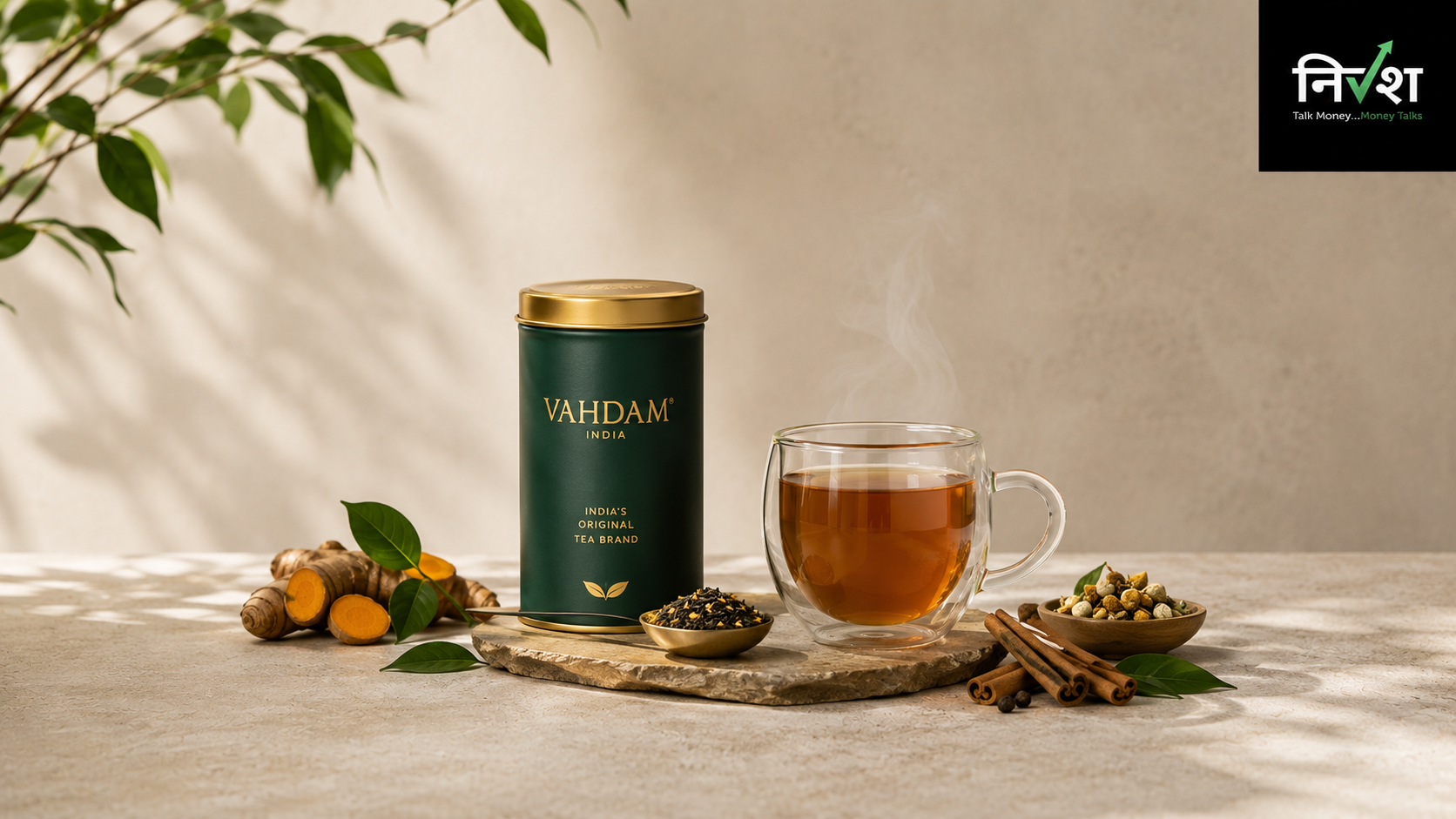
For nearly a decade, VAHDAM built a business that most Indian consumer brands only dream of.VAHDAM’s expansion into India marks one of the company’s biggest strategic shifts since its founding in 2015.
Its teas, herbs and botanicals found their way into homes across more than 180 countries. The company earned global recognition, secured shelf space at retailers such as Walmart and Costco, and built a business where almost 97% of its revenue came from international markets.
Now, it is preparing for a very different battle.
Founder Bala Sarda wants VAHDAM to build a ₹1,000 crore India business by FY29, marking a shift that could redefine the company’s next phase of growth.
The move is notable because it upends the usual startup playbook.
Most Indian consumer brands first establish themselves at home before looking overseas. VAHDAM did exactly the opposite. It spent years building a premium global brand while India remained a relatively small part of its business. That strategy helped the company command premium pricing, refine its supply chain and build a loyal customer base in markets where consumers were willing to pay more for high-quality teas and wellness products.
Today, that global-first approach has become one of its biggest strengths.
The company ended FY26 with revenue of around ₹350 crore and is aiming to reach nearly ₹500 crore in FY27. It has also returned to profitability after navigating the difficult post-pandemic years, giving it the financial flexibility to invest in India without abandoning its international business.
The opportunity at home has changed as well.
Indian consumers are no longer looking at tea simply as a daily beverage. Wellness has become a much broader category, stretching from herbal infusions and botanical blends to supplements and functional nutrition. Demand for clean-label products, natural ingredients and preventive healthcare has steadily grown, particularly among younger urban consumers.
VAHDAM believes that shift creates room for a homegrown premium wellness brand.
Instead of limiting itself to tea, the company has expanded its portfolio to include herbs, spices, botanicals and wellness-focused products. It is strengthening its presence through its website, online marketplaces, quick-commerce platforms and select offline retail, including its experience store in Delhi’s Khan Market.
The strategy is clear: build a larger wellness business instead of remaining a premium tea company.
That ambition comes with challenges.
India’s wellness market has become increasingly competitive, with established FMCG companies, digital-first startups and international brands all competing for the same customer. Unlike overseas markets, where premium Indian tea helped VAHDAM stand out, success at home will depend on distribution, pricing, product innovation and brand recall.
The company is also entering a market where consumers have more choices than ever before. Standing out will require more than a strong global reputation.
Yet there is another way to look at VAHDAM’s India push.
The company is not trying to convince global consumers that Indian ingredients deserve a premium anymore. That argument has largely been settled. Instead, it is asking Indian consumers to see familiar products such as tea, herbs and botanicals through the lens of wellness rather than everyday consumption.
That subtle shift may prove to be the bigger opportunity.
The Nevesh View Point
The ₹1,000 crore target will attract attention, but it is not the most interesting part of VAHDAM’s story.
What’s worth watching is whether a brand that spent years building credibility overseas can create the same premium perception in its home market.
For Indian startups, global expansion has often been seen as the final milestone.
VAHDAM is attempting something different.
It built its global business first. Now it wants to prove that the same brand can win over Indian consumers without compromising on quality or positioning.
If it succeeds, the company won’t just have expanded its domestic business. It could become a case study in how Indian consumer brands can build global credibility first and then use that trust to unlock growth at home.
We’ll continue tracking the story as it unfolds. Stay with Nevesh for the latest updates on India’s startup ecosystem, business, markets and investing.